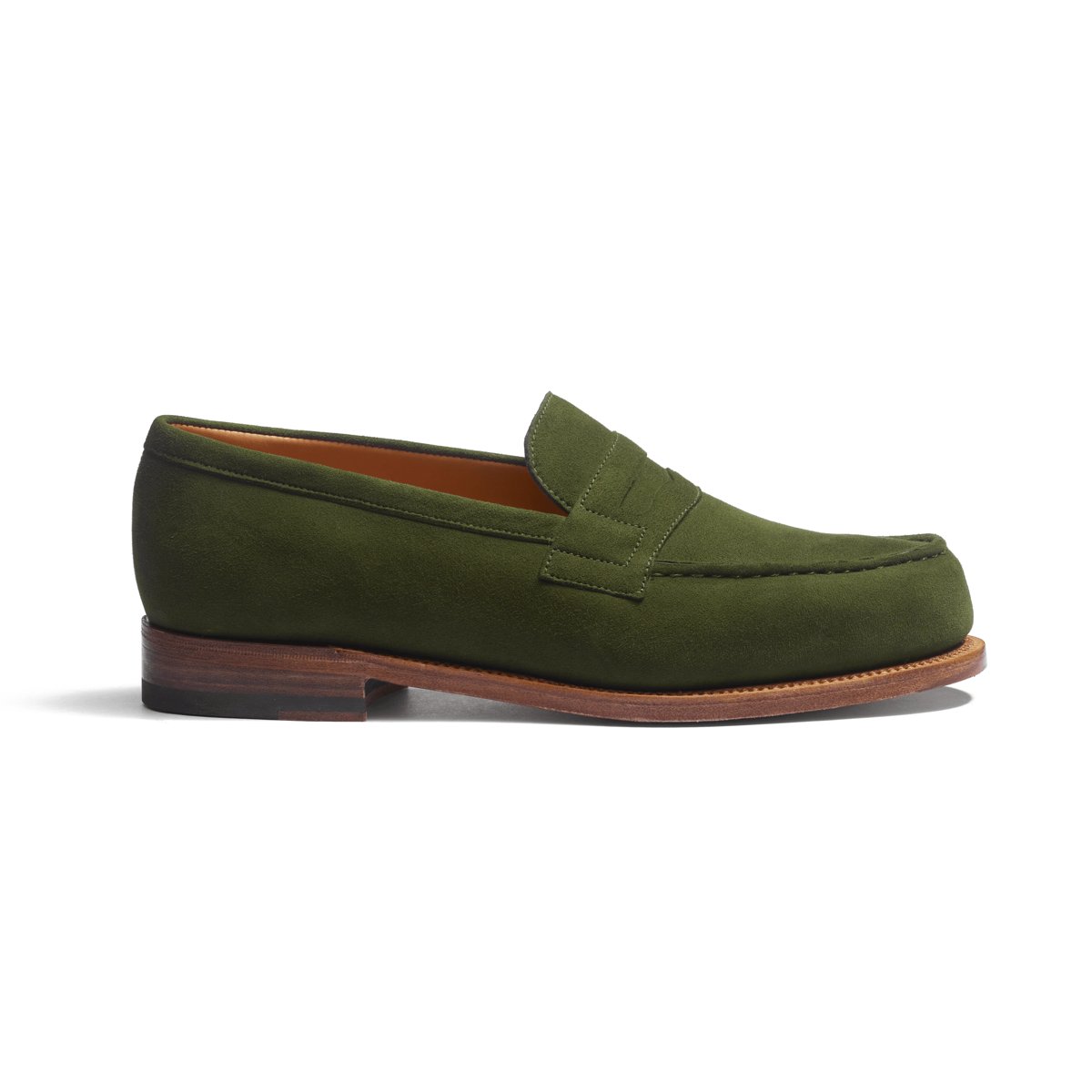
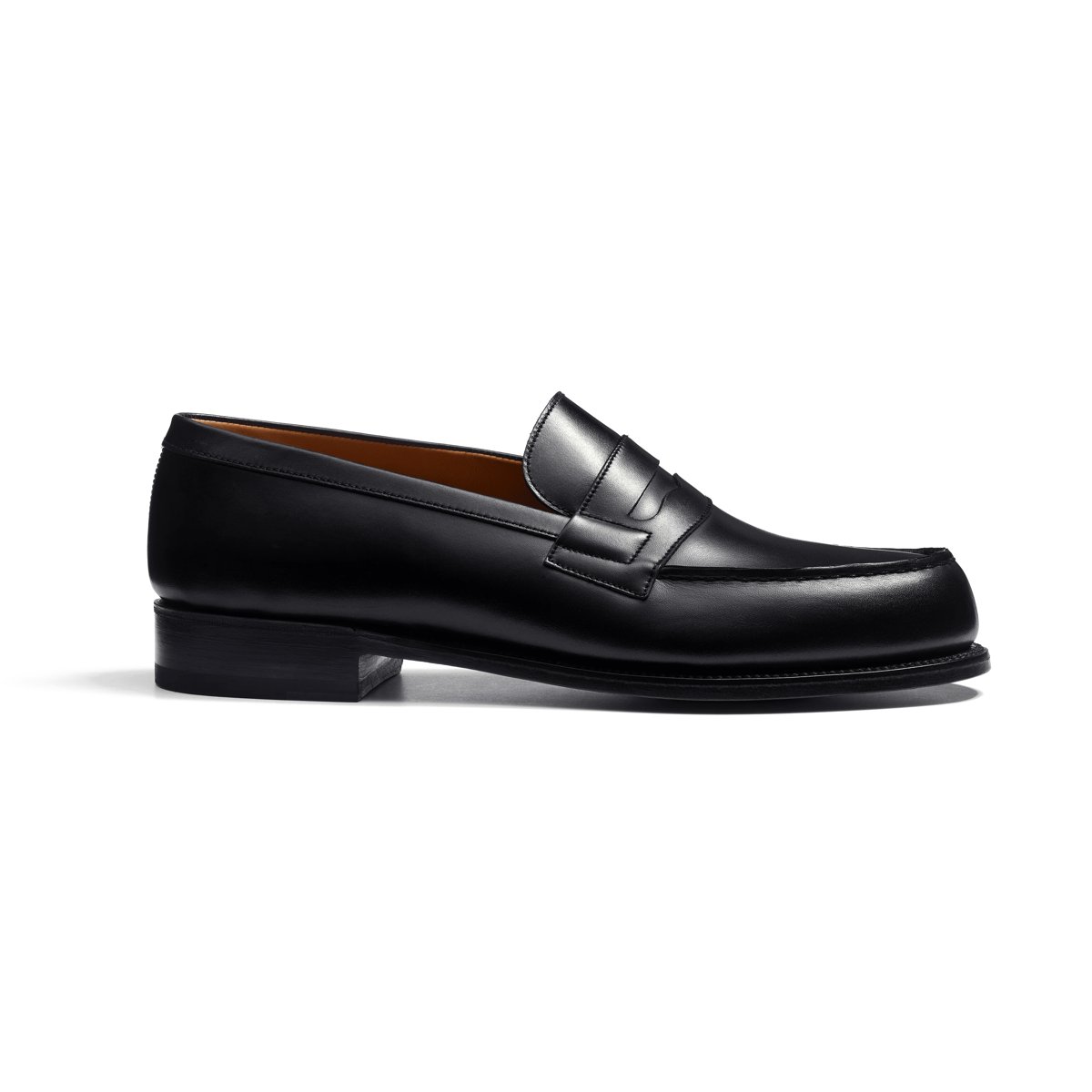
J.M. WESTON's "180 Signature Loafer" is an enduring masterpiece that symbolizes French tradition. However, behind its appeal lies a complex sizing system, which often makes people hesitate to buy. This article focuses on practical information, from the concepts of length and width to specific fitting points, to help you find the perfect pair for your feet.
KEY POINTS — Article Summary
- Prices start from ¥156,200. Models are available in multiple materials such as box calf, suede, and lizard.
- Sizes are available in combinations of length and width. Multiple widths from A to F are offered.
- The basic approach is to choose a tight fit when new and allow the shoes to mold to your feet over time.
Features and Size Range Overview
Since its birth in 1946, the 180 Signature Loafer has been a leather shoe cherished by fashion enthusiasts worldwide. Its main features are its robust Goodyear welt construction and timeless design. However, another element that makes this shoe special is its extremely diverse sizing options. While most shoes define size only by length, the 180 Loafer allows you to choose from multiple foot widths. This enables a fit close to custom-made, even for ready-to-wear shoes, which is a significant advantage over other loafers.

Understanding this complex sizing system is the first step to enjoying your 180 Loafers comfortably for a long time. Length is based on UK sizing, and width is represented by letters from A to F. Even with the same length, different widths will significantly change the feel and appearance. This article will delve into how to consider these length and width combinations and find the optimal pair for your feet.
How to Choose Your Size
Choosing the size for 180 Loafers is fundamentally based on two axes: length and width. Since it's not a simple sizing like sneakers, you need to understand its unique fitting theory. It's especially important to choose a tight fit initially and allow the leather to mold to your feet over time. This process creates a unique wearing comfort. While there are no official specific measurements, the key points for choosing are clear.

How to Choose Length
Length refers to the measurement from your toe to your heel. Key points for choosing are heel fit and toe allowance. When trying them on, first align your heel firmly with the shoe's heel cup. In this state, it's important that your heel doesn't slip out, even in a laceless loafer, and doesn't lift excessively when walking. Next, for the toes, the ideal state is a slight allowance (toe allowance) where your toes don't touch the tip of the shoe. Shoes that are so tight your toes bend, or conversely, too loose allowing your foot to slide back and forth, indicate an inappropriate length. A size 1.0cm to 1.5cm smaller than your sneaker size is often a guideline, but individual differences are significant, so trying them on is essential.
How to Choose Width
Width refers to the measurement of the widest part of your foot (the line connecting the base of your big toe and little toe). J.M. WESTON offers multiple widths, from A (narrowest) to F (widest). The key to choosing the right width is the fit around the instep and foot width. When worn, the ideal sensation is that the entire foot is evenly and snugly enveloped by the leather. Especially in the instep area, a firm hold from the leather helps prevent the heel from slipping out when walking. A slight pressure around the base of the toes is acceptable, but if you feel pain from the pressure, the width may not be right. In most cases, men with standard foot width typically start trying on D, and women with C.


J.M. WESTON's fitting is sometimes described as "vise-like." This refers to choosing a size that feels very tight when new, anticipating that the leather will settle and stretch with wear. It is believed that the ultimate fit is achieved by allowing the shoes to mold to your feet over several months to a year.
Things to Check During Fitting
To choose the optimal pair, checking during the try-on is essential. First, it's best to try shoes on in the afternoon or evening when your feet tend to swell. Also, bring socks of the thickness you usually wear. The fit can change significantly between thin and thick dress socks. Walk around the store for a few minutes and focus on checking three points: ① Does your heel lift unnecessarily? ② Is there excessive pressure causing pain around the base of your toes or instep? ③ Are your toes touching the tip of the shoe? Even if they feel tight initially, it's important to consider that leather shoes will settle their cork and the upper leather will stretch with wear, and then make your final size decision.
Comparing Features by Width
Even with the same length, a change in width completely alters the wearing comfort and visual impression. Here, we compare the characteristics brought by different widths and explain which foot shapes and preferences each is suitable for. Please use this as a reference to understand your foot's characteristics and determine which width is optimal.

Characteristics of Narrow Widths (A, B, C)
Narrow widths like A, B, and C are characterized by a sharp, dressy silhouette. For people with narrow feet or low insteps, they provide a stable fit by firmly holding the foot. Especially for loafers, which cannot be adjusted with laces, a loose width can cause the heel to slip out when walking, but choosing a narrow width resolves this issue. Visually, the overall slimness of the shoe creates an elegant look when paired with suits or slacks. However, be careful not to force a narrow width if you have standard or wider feet, as this can cause pain or deform the shoe.
Characteristics of Standard Widths (D, E)
D and E are standard widths for many people. D width, in particular, is the brand's benchmark size, offering the most balanced fit and silhouette. It combines appropriate hold and comfort, making it the starting point for those buying their first 180 Loafers. E width is slightly roomier than D, suitable for people with wider feet or those who prefer a slightly more relaxed fit. The versatility of these standard widths, adaptable for both business and casual settings, is their appeal. If you're unsure whether your foot width is standard, starting with a D width try-on is the usual approach.
Characteristics of Wide Widths (F)
F width is the widest available. It provides comfortable wear for people with wide feet, high insteps, or those prone to pressure in specific areas due to bunions, etc. It is chosen when standard widths feel too constricting. Visually, it has a slightly more voluminous appearance compared to other widths, which makes it pair well with casual styling. Even when worn with thick pants like denim or chinos, the shoe's presence holds its own, allowing for a balanced coordination. It is also suitable for those who prioritize comfort or wish to adjust the fit with sock thickness.
Pre-purchase checklist
J.M. WESTON's 180 Signature Loafer is by no means a cheap investment. To avoid regret after purchase, it's crucial to confirm several important points before making your final decision. Below is a final checklist of things to keep in mind for long-term enjoyment, from sizing to future maintenance. Go through each item and choose a pair you're satisfied with.

Confirm Try-On Time
Trying shoes on in the evening, when feet tend to swell, helps confirm if the size will be comfortable throughout the day.
Three Key Fitting Points
Check three points: ① Does your heel lift? ② Is your instep overly compressed? ③ Are your toes touching the tip of the shoe?
Try On With Intended Socks
Bring socks of the thickness you usually wear and try them on with those socks to confirm a more practical fit.