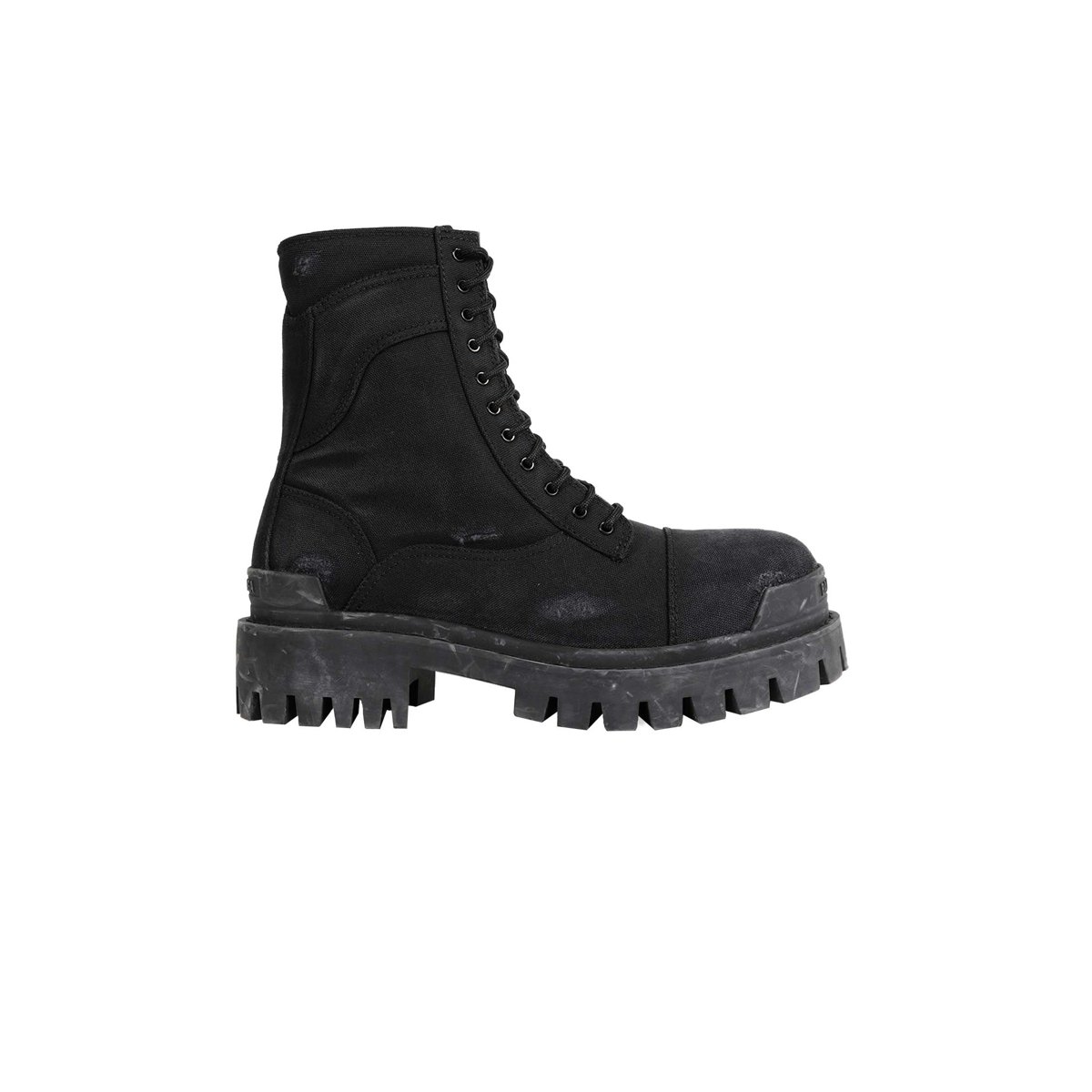
The Strike Boot is one of BALENCIAGA's iconic shoes. Its design, which combines military ruggedness with sophisticated fashion, gives it a presence that makes it the centerpiece of any outfit. However, many users are unsure about sizing due to its voluminous appearance. This article focuses specifically on the fit of the Strike Boot, providing a detailed explanation from a buyer's perspective on how to choose your size based on your usual shoe size, differences between models, and key points to check before purchasing. We offer practical information to help you find the optimal pair.
KEY POINTS — Article Summary
- It features a combat boot design derived from military footwear and a thick, chunky, toothed outsole.
- Size selection is based on your usual European size. Consider going up half a size depending on your preferred fit and foot shape, such as high insteps or wide feet.
Features and Size Range Overview
Choosing the right size for Strike Boots is the most crucial factor in determining comfort and silhouette. These boots feature a design based on classic combat boots, combined with BALENCIAGA's unique chunky, toothed outsole. The upper is made from high-quality calfskin or suede, ensuring a robust yet comfortable fit. Due to their voluminous design, an incorrect size can lead to discomfort when walking or an unintended silhouette. Therefore, it is essential to accurately know your foot size and clearly define your preferred fit before purchasing.

Sizes are available in European sizes (IT/EU) for both men and women. However, there are no official specifications for specific dimensions like heel height or sole thickness. Also, half-size availability may vary by model and season. With online purchases being common, trying them on can be difficult. Therefore, referring to the sizes of other luxury brand shoes you usually wear or customer reviews is a practical option. Careful size consideration is especially required if you have wide feet or high insteps.
How to Choose Your Size
When choosing Strike Boots, the basic approach is to use your usual European size as a reference. Then, by making fine adjustments based on your foot shape and preferred fit, you can find the optimal pair.

Use Your Usual Shoe Size as a Reference
The first step is to check the size of sneakers or leather shoes you usually wear. If you own shoes from other European brands, those sizes will be a strong indicator. For example, if you usually wear 27cm sneakers, this often corresponds to IT/EU size 42 to 43 across many brands. You can start considering Strike Boots based on this conversion. However, even with the same size label, the fit can vary by brand and last. BALENCIAGA's Strike Boots include models for which the official site recommends sizing down, so it's important to keep your standard size in mind and consider fine-tuning in the next step.
Adjust based on preferred fit
Personal preference greatly influences boot fit. If you want a sharp silhouette that feels integrated with your foot, choose your standard size. If you plan to wear thick socks in winter or prefer a slightly more relaxed fit, consider going up half a size or even a full size. Sizing up further emphasizes the overall volume of the boot, creating a more street-style look. The size you choose will depend on which style you aim for. While shoelaces allow for some fit adjustment, the basic size selection forms the foundation of comfort.
Consider size based on foot shape
Your foot shape is also a crucial factor in size selection. If you have wide feet or high insteps, your standard size might feel tight across the width or instep. In such cases, going up half a size is a common solution. Sizing up will create a little more vertical room, which can be adjusted by adding an insole. Conversely, if you have narrow feet, your standard size might feel loose. In that case, we recommend wearing thicker socks or using an insole to improve the fit. Especially for expensive shoes, finding a size that remains comfortable for long periods of wear directly contributes to satisfaction.


Compare differences by lineup
Strike Boots primarily come in two types with different boot heights: high-cut and low-cut, each offering a distinct feel and styling. With variations in materials, the choices are diverse. It's important to select the optimal model based on your fashion style and intended use.

High-cut model (Strike Boot)
The high-cut model, which completely covers the ankle, is one of the representative designs of the Strike Boot. It most strongly evokes its roots as a military boot, exuding an overwhelming presence. The appeal of this model lies in its ability to create styles that leverage its volume. If you tuck slim pants into the boots, the substantial sole and tight shaft lines stand out, creating a well-balanced silhouette. Pairing them with cropped pants or wide-leg pants to showcase the entire boot is also effective. Since the ankle is secured, they offer greater hold than low-cut models, allowing for stable walking. However, they can be a bit more troublesome to put on and take off, which should be considered.
Low-cut model (Strike Low Boot)
The low-cut model retains the high-cut's substantial sole design but features an upper shaped like a derby shoe. While maintaining the boot's characteristic volume, the ankle area is streamlined, allowing for a wider range of styling. Its versatility is appealing, whether dressing down with slacks or wearing casually with denim. It's less assertive than the high-cut model, making it suitable for those new to chunky-soled shoes. The ease of putting them on and taking them off is also a significant advantage for daily wear. The basic sizing is the same as the high-cut, but the greater ankle freedom means that minor size discrepancies can be more easily adjusted with shoelaces.
Impression and notes on materials
Upper materials primarily include glossy smooth calfskin and matte suede. Smooth calfskin gives a chic and refined impression and is relatively easy to care for. Suede, on the other hand, has a soft, warm feel and blends well with autumn/winter outfits. The way the leather stretches and conforms to the foot differs by material, so the fit may subtly change even with the same size. Generally, suede tends to be softer and more adaptable to the foot. When purchasing, considering material characteristics in addition to design preference can lead to a more satisfying choice.
Pre-purchase checklist
To ensure a successful Strike Boot purchase, it's essential to reconfirm several points before making your final decision. By assessing the fit, compatibility with your lifestyle, and existing wardrobe, you can prevent post-purchase regret. Use the checklist below to carefully determine if they are the optimal pair for you.

Understand your foot size and characteristics
Check the size of shoes you usually wear, especially European sizes (IT/EU). Also, understanding your foot's characteristics, such as high insteps, wide feet, or the opposite, is the first step in size selection.
Consider wearing scenarios and styling
Do you often wear thick socks, or do you prefer a snug fit? Clearly imagining what kind of pants you'll pair them with will clarify the size and model (high-cut/low-cut) you should choose.